




Pismaniye Turkish Cotton Candy Halva — Tuğba Kuruyemiş Plain
Selling fast! 12 people have this in their carts.
Guarantee Safe Checkout
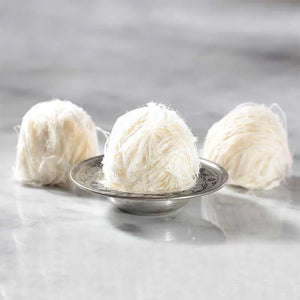
What sells abroad as "Turkish cotton candy" is really pişmaniye — a hand-pulled floss halva from İzmit, in Turkey's Kocaeli province, where confectioners have made it since the early 1600s. İzmit pişmaniyesi is so tied to the city that it holds a Turkish geographical indication, registered in 2010. It only looks like fairground cotton candy. The recipe and the result are different.
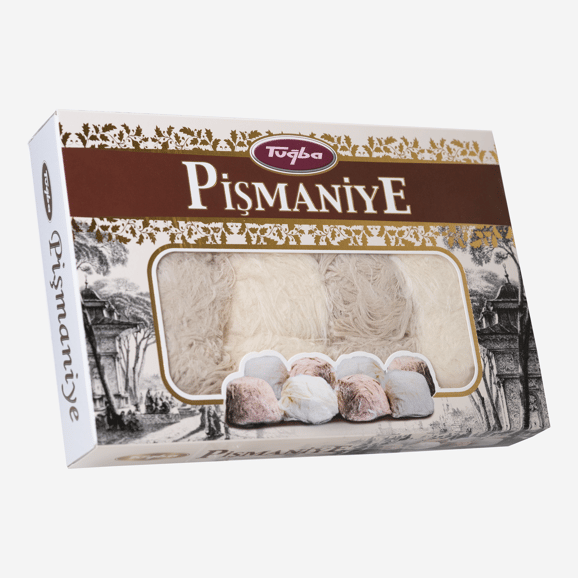
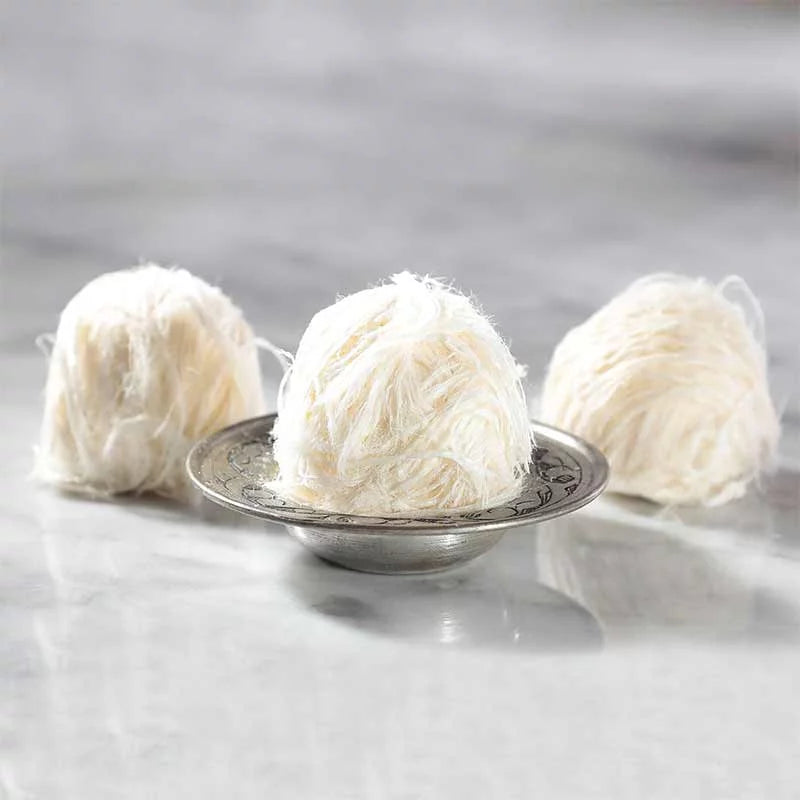
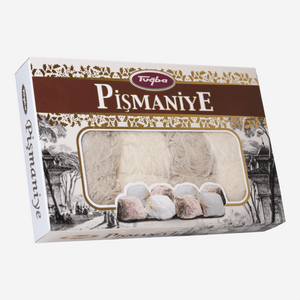
Fairground cotton candy is pure sugar spun by a machine; it tastes of sugar and nothing else. Pişmaniye starts with wheat flour slowly roasted in fat until it turns nutty, then boiled sugar is folded over it and stretched by hand — pulled, doubled, and pulled again until it splits into thousands of silk-fine white strands. The roasted flour is what gives pişmaniye its toasted, faintly buttery depth, and the strands dissolve on the tongue rather than sticking to it. Tuğba Kuruyemiş, a Turkish nut-and-confectionery house, presses those strands into loose nests and packs them in a windowed box, so you can see the floss before you open it.
How to serve it: pull a nest apart with your fingers next to Turkish coffee or black tea — the bitterness against the melting sweet is the classic pairing. Crumble it over ice cream or yogurt, or set the open box on a dessert table and let people tear pieces off.
- Plain (sade) pişmaniye — classic white floss halva, no coating
- Made in Turkey by Tuğba Kuruyemiş; supplier-listed ingredients: wheat flour, vegetable oil, sugar, cocoa, water, citric acid (E330), vanilla flavouring
- Allergen: contains gluten (wheat flour is the base of all pişmaniye)
- Store cool and dry; the strands stay crisp until the box is opened
If you have been searching for Turkish cotton candy, pişmaniye, pashmak, or floss halva — they all lead here. This is the İzmit original, in its plain form.


