




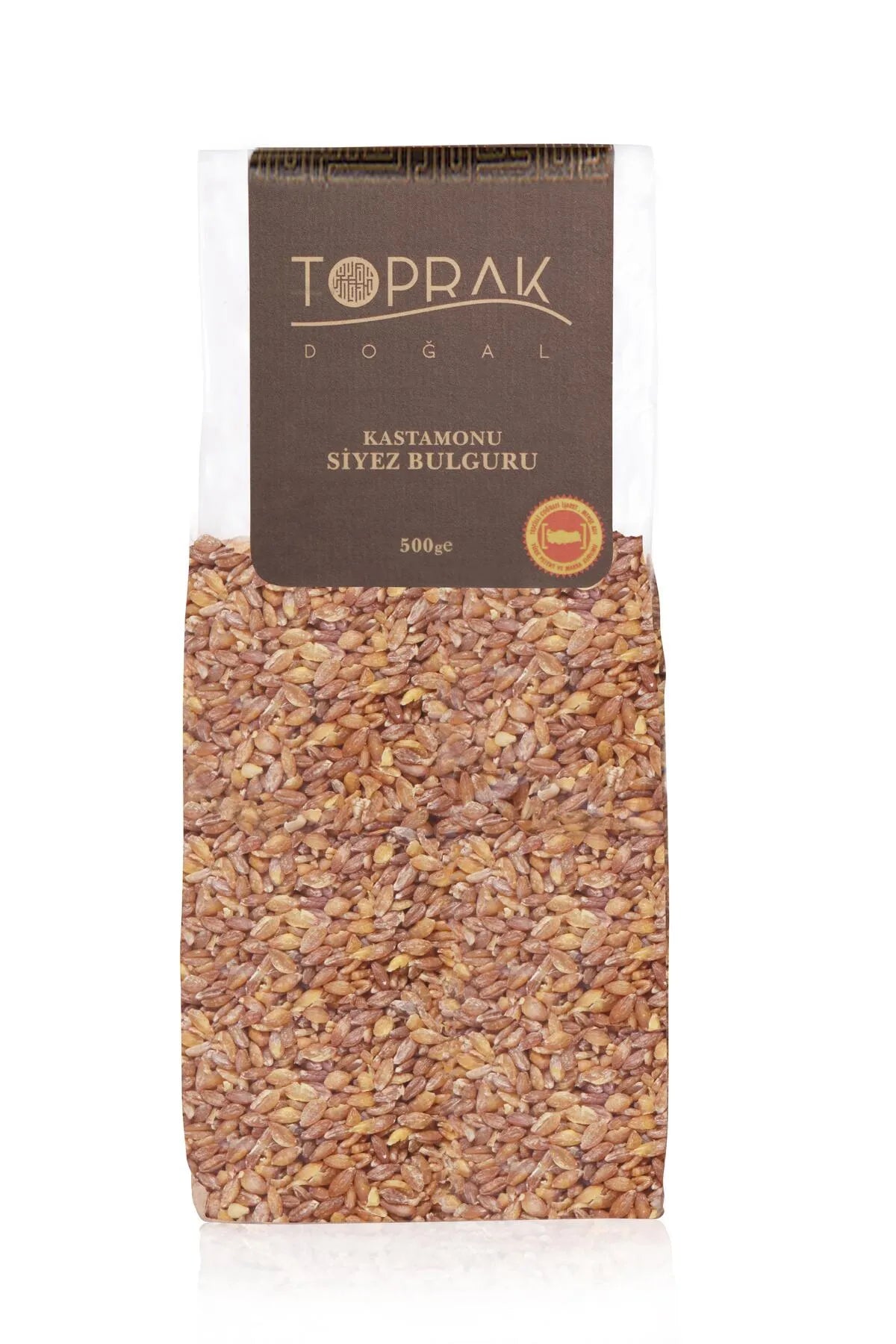
Einkorn Bulgur (Siyez) from Kastamonu, Toprak Doğal — 500g Ancient Grain
Selling fast! 4 people have this in their carts.
Guarantee Safe Checkout
What Siyez Is — and Why It Matters
Siyez is the Turkish name for Triticum monococcum, einkorn wheat — one of the oldest cultivated grains on earth, domesticated in Anatolia roughly 10,000 years ago. While most modern wheat is a hybridised descendant of several wild grasses, einkorn is diploid: it has never been crossed with another species. Its genome is the simplest of any wheat in commercial use today, and its cultivation in the forested, Black Sea–facing hills of Kastamonu has continued without interruption for centuries.
Toprak Doğal sources this bulgur from İhsangazi, the district within Kastamonu province where einkorn production is most concentrated — over 900 farmers still grow it there. The grain thrives in thin, nutrient-poor soils and survives winters with more than three months of snow cover, conditions that would ruin modern hybrid varieties. That hardiness, combined with the absence of the genetic modifications applied to contemporary commercial wheat, makes İhsangazi siyez a genuinely distinctive ingredient.
From Grain to Bulgur
Bulgur is made by parboiling the whole grain, drying it, then cracking or coarsely milling it. The traditional method in Kastamonu involves immersing the husked grains in boiling water for roughly twenty minutes, cooling them rapidly, spreading them in the sun to dry, then grinding them in a millstone until the grain splits — as local producers describe it, “like the wings of a mosquito.” What results is a firm-textured, reddish-brown cracked grain with a distinctly nutty, slightly earthy flavour that is noticeably more pronounced than the milder taste of standard durum bulgur.
Composition and Allergen Notice
Einkorn is a wheat and contains gluten. It is not suitable for people with coeliac disease or wheat allergy. Do not use it as a substitute for gluten-free grains. Research published in peer-reviewed journals (including a comparative gliadin digestibility study in Frontiers in Nutrition, 2020) indicates that einkorn gliadins are partially hydrolysed during gastrointestinal digestion more readily than durum wheat gliadins, which may be relevant for some people with non-coeliac gluten sensitivity — but this does not make the grain safe for diagnosed coeliac disease. If you have any wheat-related medical condition, consult your doctor before consuming this product.
Einkorn grain is notably higher in protein than modern bread wheat, with studies on Kastamonu siyez recording approximately 20% protein content. It also contains higher levels of carotenoids, essential fatty acids, and minerals — including iron, zinc, and manganese — compared with common and durum wheat varieties grown in the same region.
How to Cook It
Siyez bulgur takes slightly longer to cook than fine-grain durum bulgur because of its firmer structure. A reliable pilaf method: rinse the bulgur briefly, then sauté it with finely diced onion in butter or olive oil for two to three minutes. Add hot broth or water at a ratio of approximately 1.5–2 parts liquid to 1 part bulgur, bring to a simmer, cover tightly, and cook over low heat for 18–22 minutes until the liquid is absorbed. Remove from heat and rest, still covered, for five minutes before fluffing with a fork.
Beyond pilaf, siyez bulgur works well in kısır (the Turkish grain salad made with tomato paste, lemon, parsley, and spring onions), soups, stuffed peppers, and cold grain bowls dressed with olive oil and herbs. Its robust, nutty character holds up to strong flavours — pomegranate molasses, sumac, roasted vegetables — better than lighter grains.
Storage
Store in a cool, dry place away from direct light. Once opened, transfer to an airtight container. Shelf life is typically 12–18 months from production date when stored correctly.
Allergen: CONTAINS WHEAT / GLUTEN. Packed by Toprak Doğal. Net weight 500 g.


