




Vendor: Vendor:
Musko
Cevizli Sucuk Walnut Churchkhela – Turkish Grape Molasses Walnut Sweet
Selling fast! 10 people have this in their carts.
Guarantee Safe Checkout
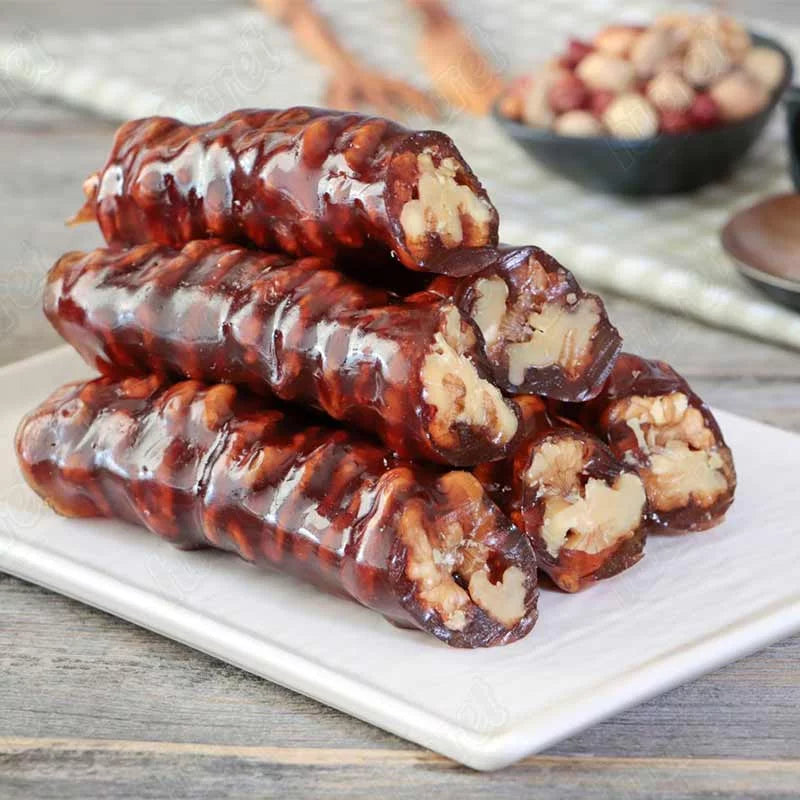
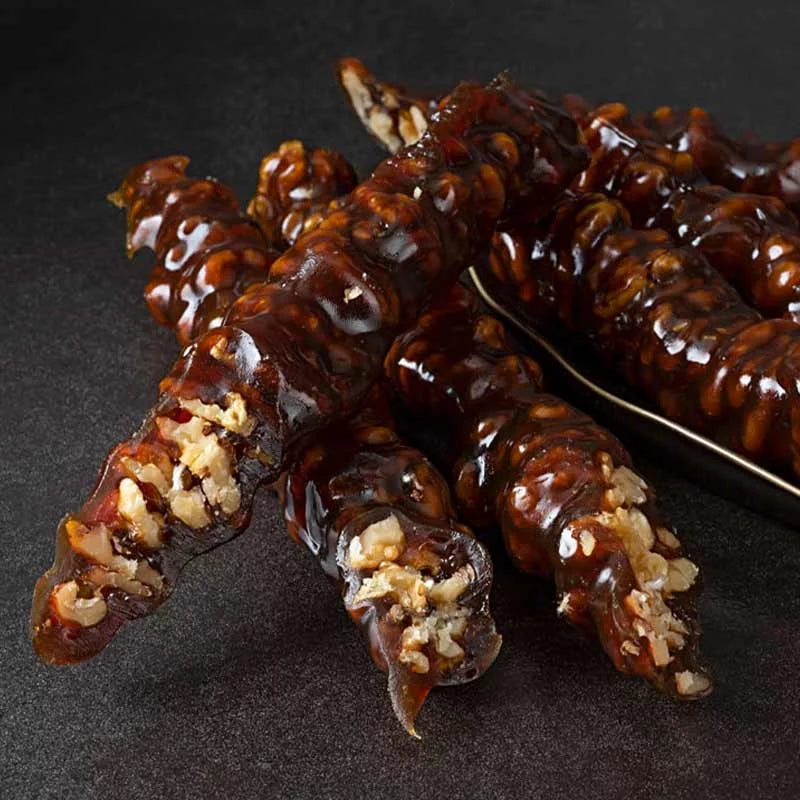
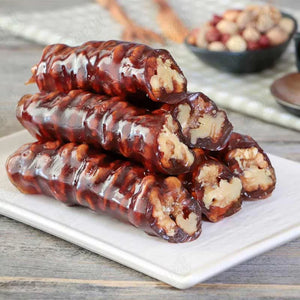
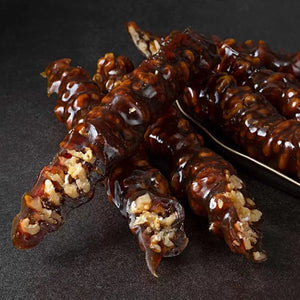
One food, three names. In Turkey it is cevizli sucuk; across the Caucasus it is churchkhela; in Elazığ they say orcik and in Malatya, köme. Whatever you call it, the method has barely changed in centuries: whole walnut halves are threaded onto a string, dipped again and again into grape molasses (pekmez) thickened with starch, then hung up to dry until the coating sets into a dense, chewy sleeve around the nuts.
First, the thing it is not: despite the name, this is not meat. Turkish uses "sucuk" for two completely different foods — the spiced beef sausage and this sweet — because both hang in the same long, rope-like shape. This one is a confection of grape molasses and walnuts, nothing more savory than that.
The food historian Priscilla Mary Işın traces walnut sucuk in Anatolia back to the 15th century, and the Ottoman traveler Evliya Çelebi recorded grape sausages being made in Gaziantep and Manisa in the 1600s. In Georgia, the Kakhetian way of making churchkhela was added to the country's national Intangible Cultural Heritage register in 2015. It earned that endurance honestly — grape molasses preserves the walnuts, so the sweet keeps for months without refrigeration, which is why it traveled in saddlebags long before it traveled in parcels.
Cut it into coins to serve with Turkish tea or coffee — the chew of the molasses against the snap of the walnut is the whole point. Ingredients: sugar, grape molasses, walnuts, wheat starch, corn starch, acidity regulator. Contains tree nuts (walnuts) and wheat. Choose 250 g to try it, 500 g or 1 kg for the household, or 3 kg if your family already knows what happens when a string of this enters the room.
| wright |
250 gr, 500 gr, 1000 gr, 3 Kg |
|---|


